
Brace height adjustment
Setting the brace height is the first job to do to get the most out of your bow. An optimal brace height can tighten arrow grouping by 20 to 30% without any change to your shooting technique. To make this adjustment, start by measuring the distance between the string and the arrow rest. A brace height that is too low can cause unwanted noise and instability, while one that is too high can reduce the bow’s power. It is crucial to adapt the brace height to the size of your bow, although specific values are not always available. Make sure you test after each adjustment to check the effect on your shooting.
Tiller adjustment
The tiller, or the balance of the bow’s limbs, is another essential aspect to tune. Poor balance can generate up to 25% of stray vibrations, which harms the accuracy of your shots. To adjust the tiller, check that both limbs respond in sync when shooting. Precise tiller adjustment reduces vibrations and improves the bow’s overall efficiency. It is recommended to adjust the tiller gradually and to test the results after each change. Take the time to watch how the bow behaves when shooting to find the optimal setting.
- Field / range1,941 · 64%
- Archery venue381 · 13%
- Archery club367 · 12%
- Sports centre325 · 11%
- Indoor hall15 · 0%
Nocking point adjustment
Nocking point adjustment, or setting the nock position, is essential for a clean string release. A poor nocking position can compromise the arrow’s flight path, leading to inaccurate shots. To set it, start by identifying the current nocking position, then adjust it to suit your shooting style and your bow’s characteristics. Make sure to run several tests to find the ideal position that will give a stable flight path. A good nocking point setting also helps minimise vibrations and improve the consistency of your shots.
Plunger button adjustment
The plunger button, which influences the position of the arrow relative to the string, plays a crucial role in shooting accuracy. An incorrect setting can cause scatter in arrow grouping. To optimise this setting, start by assessing the pressure exerted on the arrow when shooting. Adjust the plunger button to get adequate pressure that lets the arrow pass unhindered while maintaining good contact with the string. A good plunger button setting can significantly improve the accuracy and consistency of your shots.
Bare shaft test at 15 metres
The bare shaft test is an effective method for diagnosing nocking faults and adjusting arrow alignment. To carry out this test, shoot unfletched arrows at a distance of 15 metres. Watch how the arrows behave in flight. If they fly unstably or spin, this may point to a nocking or tuning problem. This test detects faults instantly and lets you make the adjustments needed to improve accuracy. After running the test, don’t hesitate to adjust your bow’s settings according to the results you observe.
Adjusting draw weight
Draw weight adjustment must be done with care. Start by adjusting the limb bolts evenly to avoid an imbalance. Use a bow scale to check the draw weight after each adjustment. A poor setting can harm the bow’s efficiency, affecting the speed and accuracy of your shots. It is important not to increase draw weight too much without considering your level and personal comfort. Take the time to experiment with different settings to find the draw weight that suits you best.
Ready to shoot?
Find an archery venue near you.
What we don’t know yet
Despite this advice, some limits remain. The specific brace height values recommended for each bow size are not always accessible, and the precise methods for adjusting the tiller depend on each archer’s individual characteristics. In addition, advanced techniques for setting the plunger button and detailed procedures for the 15-metre bare shaft test still need research to optimise settings. Finally, specific recommendations for setting draw weight according to the archer’s level remain to be explored.
FAQ — using the directory
Where do the listings come from?
From OpenStreetMap, the open map edited by volunteers. Each listing shows its source and we publish the method on the sources and methods page.
Is Archery Info an official federation directory?
No. It is an independent and unofficial directory with no link to World Archery, national federations or the venues listed.
A venue is missing or wrong. What can I do?
Use the contact page to correct or remove a listing, or fix it at the source on OpenStreetMap.
Can I book a lesson here?
No. We do not sell bookings or lessons; we only show where to find a club or range. Always confirm access with the venue.

Keep reading
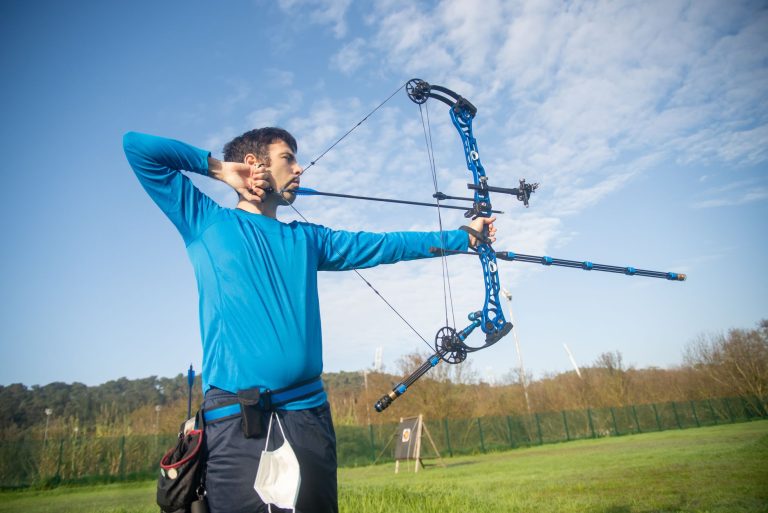
Physical conditioning exercises for archery
Discover the essential exercises to get the most from your archery performance. Good physical training is the key to improving your technique…

A practical guide to preparing for an archery competition
Discover the essential steps for getting ready for an archery competition. Follow our guide to maximise your performance and avoid common pitfalls.
Understanding competition bows: a technical approach
Competitive archery calls for a thorough understanding of the different types of bow. This article explores the characteristics and advantages of recurve…